The concept of waiting is often extremely difficult for some children with autism. Often we try using timers and schedules or even counting to 10 yet it doesn’t appear that the student is quite grasping the concept of waiting. I don’t want you to stop using your timers or schedules but lets add in an incentive for waiting. Here following is a fun game you can play to practice waiting. Notice I said practice. You are probably going to have to do this many times before your child gets it and then you are going to have to generalize it to other situations. Here goes:
Materials:
1. timer either the one that beeps or the visual one
2. treats like popcorn or m&m’s
3. container for treats you can use a see through plastic bag if you want
Procedure: Get two cups or plastic bags. In the first cup put one piece of popcorn and in the second cup put 10 pieces of popcorn. You can use the candy or the plastic bag for this, the set up is the same one piece in the first bag and 10 pieces in the next bag. Decide if you are going to use a timer or if you are going to count to a specific number. Either way is fine and will depend on your child or if you have a timer. Have your child in a distraction free environment and tell your child he needs to wait a minute, or 10 seconds before he can eat the popcorn. Give your child the cup that has 1 piece in it and set the timer or start counting to 10. If your child eats the popcorn the game is over, no big deal, no tantrum.
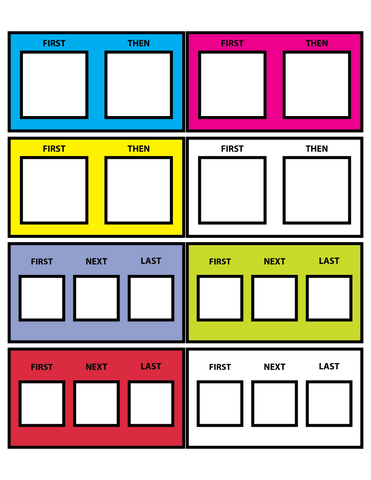
If your child is able to wait and not eat the popcorn have them give you the cup and then you give them the other cup that has more popcorn in it and tell them they can eat it. If your child is successful you can start to change the variable such as having them wait longer, changing the environment, making the item they have in front of them more tempting, sometimes giving them more sometimes not giving them more even if they did wait. You can then add in a schedule in which some of the activities might be 10 minutes or 40 minutes long and they have to wait until those activities are done before they get what ever it is that they are waiting for. Now is also a good time to add in first then statements.
If your child was not able to wait or didn’t quite understand what was going on this is ok. You are also going to change the variables so that is becomes easier to wait. One of the things you might try is reducing the wait time. You might also hold the cup with the piece of popcorn in it with them so they can’t eat it. When the timer goes off help them using hand over hand to give you the cup and then you give them the other cup you have prepared.
Another variation which might be easier to teach is to place the piece of candy on the child’s desk. You then sit down with the child and help them sit with their hands in their lap. When the timer goes off you pour the other pieces of candy onto their plate. You practice this 2x and then on the third trial you do not hold the child’s hands. They will have an opportunity to either wait for more candy or eat the one pice you gave them.
If your child is still not understanding you could start with something they do not like. Place the string bean on a paper plate in front of them, when the timer goes off they hand you the plate or string bean and you hand them the treat. Once they master this over several sessions put an item on the plate that is moderately preferred but not something they love. Give the instructions to wait and when the time is up have them exchange the item for something they like.
The key here is if your child can wait you want to expand on this and generalize it. If however they are having trouble with waiting you want to keep making it easier until they are successful. Once the child is successful then you have something to work with and you can expand on this.
Sometimes you find something so amazing you are blown away. Watch this video on Jake. At age 2 Jake was diagnosed with autism, at age 8 he is sitting in on college classes, at 10 years old it took him less than 2 weeks to teach himself all of high school math, and by 13 he is published in a journal. He has perfect memory for numbers and math but not for where things are left in the house.
Is the skill demonstrated upon your verbal instruction?
Is the skill demonstrated without your assistance?
Is the skill demonstrated reliably over time?
Are all components of the skill demonstrated?
Is the skill demonstrated with several different people, in several different contexts, with various stimuli?
Selecting a Program
Does you child have the necessary prerequisite skills for this program?
Is this program developmentally/age appropriate for your child?
Will this skill help to reduce problem behaviors?
Will this skill lead to the teaching of other skills?
Is this skill likely to generalize?
Will your child acquire this skill within a reasonable time frame?
Is this an important skill for you and your family?
Is this a skill that your child can use through out the day?
In addition to this chapter you will find tons of information that is very parent friendly, non technical and practical to implement at home
Wishing you and your loved ones a very happy new year. If you have some New Years resolutions here are some tips.
1. Write down your goal in measurable terms. Be as specific as possible. Include when, how, and what in your definition. Saying I will lose weight is not good enough but saying I will exercise by riding my bike for 30 minutes Tuesday and Friday morning at 8:00 AM is better. I will also eat healthy food while good could be better. I will eat a banana and one half cup of whole grain cereal with skim milk is much more specific.
2. Once you know what your target behaviors are create a check list to mark off each time you engage in the target behavior. Then graph your progress towards your goal.
3. While you are doing this get the help of family and friends to keep you on track. They will be able to cheer you on as you make progress and keep you motivated when you get tired.
4. Celebrate progress and rewrite goals into smaller objectives if you are struggling. A set back for one day does not mean a set back for the entire week. Try mastering one goal at a time. Having too many goals at the same time will make it more difficult to meet even one of you goals.
Good luck, and a very happy 2012 to you and yours.
I hope you passed the BCBA exam. The most recent exam of September of 2011 only 46 percent of people taking the exam passed. This is a huge drop, in previous tests the average pass rate is about 70 percent. The pass rate for the most recent BCABA exam was 48 percent and has remained consistent from previous years. If you did not pass the exam you are not alone but what are your plans? Are you going to reread the White Bible, by Cooper Heron and Heward or perhaps take a class online or buy Eversol’s Learning Module Series. For those of you that did pass where did you take your BCBA classes? At a university or online? Do you feel this made a difference in you passing or do you feel it was your own hard work and studying. Which sections of the exam did you feel were the hardest? Which sections did you think were the easiest? What tips can you share for someone who wants to pass the exam. What tips can you offer for someone who is just beginning to take the course work?
Quite a bit actually. A preference assessment is used to find things that can be used as reinforcers in an ABA program. In a preference assessment I might offer you two different items and see which one you choose or I might offer you several items consecutively one at a time and see how long you engage with each item. I might also ask you what types of things do you you like while conducting a preference assessment.
This is what Pandora does. After you sign up for a Pandora account they walk you through creating a customized radio station. First you choose a song or artist that you like to be the seed of your station. Once you do this Pandora will play songs from that artist and from other similar artists. You then have the opportunity to give feedback with either thumbs up, thumbs down, or skipping the song. Sometimes the fit is right, you like the song and you give the song a thumbs up and other times the song isn’t quite what you wanted and you give it a thumbs down. Based on your response Pandora selects another song that it thinks you might like to hear. As Pandora does this it collects information on the songs that you like and the songs that you don’t like to build a profile. It uses the information from all of its listeners so that if you like music from a certain artist and other people who like the same artist also like music from a different artist Pandora will play music from the second artist.
With the students we work with if we know that they like Playdoh we might see if they like silly putty. If the student likes crayons maybe they like painting or markers or colored pencils. After you do you initial preference assessment continue to throw in new items like Pandora does. No you won’t get it right each time but the more items you try and the more feedback you get on each item the better you will get at finding possible reinforcers.